
Phase 1 orthodontics treats a specific bite or jaw problem while a child is still growing and has a mix of baby and permanent teeth. Phase 2 is comprehensive treatment, usually braces or clear aligners, that aligns the teeth and finishes the bite once most permanent teeth have come in…. Read More…

If you’ve noticed your child’s tongue pushing forward when they swallow, resting between their front teeth or peeking out when they talk, you may be seeing tongue thrust. Tongue thrust in children is a swallowing pattern in which the tongue pushes forward against or between the front teeth instead of… Read More…

Mixed dentition is the stage when a child has both baby (primary) teeth and permanent teeth at the same time. This stage happens most commonly between roughly ages 6 and 12. It matters orthodontically because permanent teeth are erupting while the jaws, dental arches, and bite are still developing. Orthodontists… Read More…

Functional orthodontic appliances are devices used in selected growing children to change how the upper and lower teeth and jaws relate to one another. They often work through mandibular positioning, meaning they hold the lower jaw forward while orthodontic treatment is underway. Two of the most common types are the… Read More…

Overbite and overjet are two different bite relationships, and parents often use the terms interchangeably even though they describe different things. Overbite refers to the vertical overlap between the upper and lower front teeth. Overjet refers to the horizontal projection of the upper front teeth in front of the lower… Read More…

A Class II bite is a condition in which the upper teeth and jaw sit farther forward than the lower teeth and jaw. In children, this relationship can arise from tooth position, jaw growth, or both. Class II does not automatically mean your child simply has “an overbite.” The two… Read More…

An open bite happens when a child’s front or back teeth do not touch properly when they bite down. Instead of the top and bottom teeth meeting evenly, a visible gap remains, even when the jaw is fully closed. If you have noticed this in your child’s smile, take a… Read More…
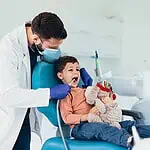
An underbite happens when a child’s lower jaw grows forward, the lower front teeth sit ahead of the upper front teeth, or both occur together. This type of bite pattern is a form of malocclusion in children, and it can involve the teeth, the way the jaw is growing, or… Read More…
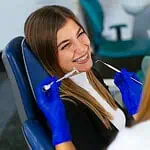
If your child’s orthodontist or pediatric dentist has mentioned a palatal expander, you probably have questions. What does it do? Does it? Does your child really need one? A palatal expander is an orthodontic appliance that gently widens the upper jaw over time. Orthodontists recommend it when the upper jaw… Read More…

If your child’s dentist has mentioned a crossbite, or if you have noticed that your child’s teeth do not seem to line up the way they should, you are not alone. Crossbites are one of the more common bite problems seen in growing children, and they are worth taking seriously…. Read More…
